Systems science gone bio

Medicine deserves the same engineering rigor as bridges, aircraft, and reactors.

Nureon brings model-based root-cause analysis to clinical diagnosis. Every result is transparent, auditable, and reviewable.

The problem

Diagnostic error is the largest unsolved patient-safety crisis in medicine.

“This brings the estimated total direct cost of diagnostic error to 17.5% of annual health expenditure. Close to a fifth of what OECD countries spend on healthcare is consumed by harm stemming from diagnostic error, most of which is preventable.” (1)

12M
U.S. adults affected by diagnostic error each year in outpatient care.
(2)
10%
of patient deaths involve a diagnostic error.
(2)
#1
cause of medical malpractice payouts in the United States.
(2)
1 in 20
outpatients will experience a diagnostic error in any given year.
(2)
Sources:
(1) Slawomirski, L. et al. (2025), “The economics of diagnostic safety”, OECD Health Working Papers, No. 176, OECD Publishing, Paris
(2) Singh et al., BMJ Qual Saf 2014 · National Academy of Medicine, Improving Diagnosis in Health Care 2015
The wedge

We start where the gap is widest, most measurable, and most reversible.

Secondary hypertension in young adults, 18 to 40 years old.

30%
of hypertensive patients under 40 have a secondary, often curable, cause.
<2%
of eligible patients are screened for primary aldosteronism — the most common secondary cause.
4.5 yrs
median delay from hypokalemia to a primary aldosteronism diagnosis.
42%
have irreversible end-organ damage by the time they reach a specialist.

Why this market, first.

  • Specific. A well-bounded differential of 8–10 disease categories.
  • Measurable. Strong epidemiology (de Freminville 2024, n=2,090) anchors priors.
  • Reversible. Most secondary causes are curable when caught early.
  • Validated buyer. Hypertension specialty clinics already feel this pain.
  • Expandable. The architecture generalizes — a foothold, not the destination.
The engineering-analogy insight

Problem solving vs. differential diagnosis.

Modern problem solving in engineering and the theory and practice of differential diagnosis in medicine are conceptually identical.

Engineering problem solving
Medical differential diagnosis
Context definition, problem statement
Gather medical history, signs and symptom lists
Identify all possible root causes
List possible candidate conditions for the symptoms
Define tests priority list
Prioritise differentials based on prevalence and urgency
Perform tests, eliminate not-root-causes, verify root cause
Test hypothesis, arrive at diagnosis through elimination, verify

Engineered systems are not as complex as the biology of the human organism — yet the model-based tools developed for root-cause analysis in engineering are currently more advanced and powerful than the tools in the hands of clinical diagnosticians.

We are on a mission to change that.

The solution architecture

A diagnostic reasoning engine in five integrated layers.

From encoded mechanism to a ranked differential: current differentialrecommended testresult enteredre-ranked differentialresolve or abstain

Layer 01

Knowledge base

Anatomy (structure tree) → physiology (function tree) → pathology (failure tree): a model of the human organism.

Layer 02

Diagnostic signatures

Each disease from ICD-11 maps to a characteristic fault-tree equivalent, connecting causes to symptoms.

Layer 03

Causal-inference engine

An algorithmic selective-abduction engine creates the list of all possible causes and scores them.

Layer 04

Detection control

Maps each test to signatures, including its sensitivity and specificity — so a negative screen never prematurely closes a case.

Layer 05

Abstention guard

When no in-scope cause coheres, it returns “unexplained — escalate” and surfaces the unexplained findings and the nearest-candidate blockers, providing scaffolding for the clinician with no unvalidated claim.

Output: a ranked, explained differential, with an auditable reasoning chain and a suggested set of next tests.

Why now

Four shifts have converged to make this the moment.

01

Diagnostic safety is a board-level priority.

The 2015 NAM report reframed diagnostic error as the central unsolved patient-safety problem. Systems and payers are now funding solutions.

02

The AI-scrutiny moment favors auditable systems.

Black-box ML faces regulatory and clinical headwinds. The FDA's evolving AI/ML framework privileges interpretability. For Nureon this is a feature, not an afterthought.

03

Value-based care creates economic alignment.

Health systems now bear the cost of missed diagnoses. The 4.5-year aldosteronism delay is an outcome metric tied to reimbursement.

04

The foundations are finally mature.

FMEA, Root Cause Analysis (RCA), and Fault-Tree Analysis (FTA) are production-ready. Nureon assembles them.

Market

A defensible €50–100M ARR wedge, and the multi-billion-dollar platform potential behind it.

SOM · reachable in 4–5 yrs
€50–100M
EU hypertension specialty, endocrinology & nephrology — ~2,000 sites at €25–50K each.
SAM
€500M–1B
EU chronic-disease diagnostic decision support — AKI, thyroid, dyspnea. Same architecture, new domains.
TAM
€5B+
Global market for auditable clinical decision support, growing as diagnostic safety becomes regulated.

Market sizing reflects working assumptions for pricing and adoption, to be refined with pilot data.

Business model & go-to-market

Land at the specialist. Expand to primary care. Embed in the EHR.

Phase A

Land

Hypertension specialty clinics
  • 10–25 sites, year 1–2.
  • Direct sales to medical directors who feel the late-referral pain.
  • SaaS + per-eligible-patient pricing.
  • Metric: screening rate & time-to-diagnosis.
Phase B

Expand

Endocrinology, nephrology, cardiology
  • Cross-sell to adjacent specialties at the same systems, while we expand the KB.
  • Domain expansion: AKI, thyroid workup, other chronic conditions.
  • Network-effect, enterprise pricing.
Phase C

Embed

Primary care, via EHR integration
  • FHIR-based EHR integration with major vendors.
  • Decision support at the point of care — where most errors originate.
  • Reimbursement-aligned, value-based pricing.

Working assumption: €25–50K ACV per specialty site at Phase A, with 70%+ gross margins typical of clinical SaaS.

Roadmap

18 months to retrospective validation — the critical inflection point.

Each phase has an explicit go/no-go gate. Phase 4 is the diligence-grade milestone for Series A.

M1 M4 M7 M10 M16 M18
Phase 1 — Knowledge base
Phase 2 — Probability data
Phase 3 — Software build
Phase 4 — Validation
Phase 5 — Pilot
Critical gate
Phase 4 → 5
Phase 4 go/no-go

Correct diagnosis in top-3 for ≥90% of cases · alert sensitivity ≥85% · false positives <20%

Regulatory pathway

We qualify as decision support by design.

European Union · MDR

Class IIa

Under MDR Annex VIII, Rule 11, software informing a diagnostic decision is Class IIa. Positioned around a screening decision, with framing that avoids pushing it to IIb. Entails CE marking and an ISO 13485 quality system.

United States · FDA

Non-Device CDS

Targets the Non-Device Clinical Decision Support exclusion (21st Century Cures Act). The mechanistic design is what satisfies the key criterion: the clinician can independently review the basis of each recommendation.

Quality system from the start of Phase 3

ISO 13485 (QMS) · IEC 62304 (software lifecycle) · ISO 14971 (risk). An FDA pre-submission is sought before the prospective pilot; the FDA QMSR (effective Feb 2026) is the reference for the build.

Team

We are a team of clinicians and engineers.

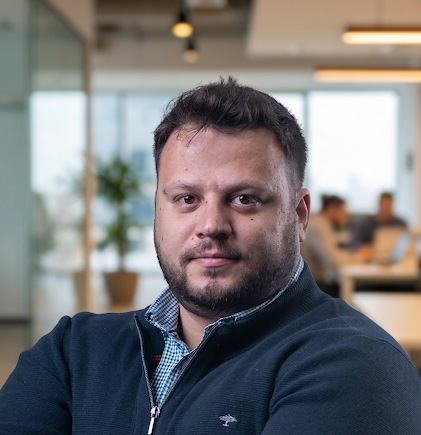
Co-founder
Alexandros Papalexiou
CEO & technical lead
Alexandros Papalexiou
  • Deep expertise in systems engineering and modern reliability methodology — previously at Bugatti, Lotus, Hellenic Air Force.
  • Model-based FMEA and FTA methods applied to clinical diagnosis; owns the causal-net construction.
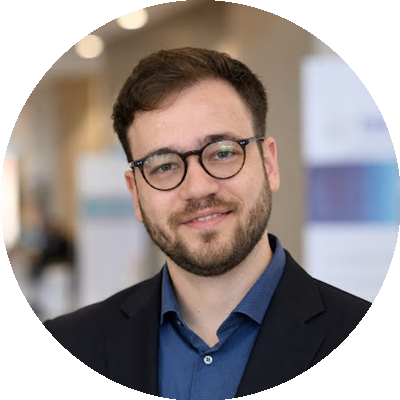
Co-founder
Panagiotis Papalexiou
Chief Scientific Officer
Panagiotis Papalexiou
  • Medical Doctor, Anesthesiology Consultant.
  • MSc Personalised Medicine, University Hospital of Patras, Greece.
  • ERC — Course Director.
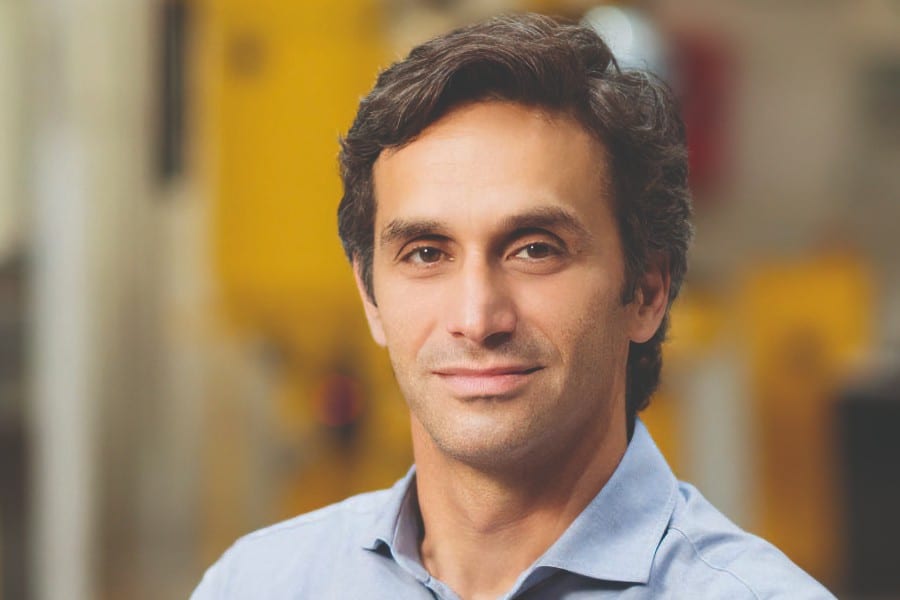
Chairman of the Board
Konstantinos Konstantinopoulos
Coffee Island — CEO
Mechanical Engineer and Aeronautics.
Konstantinos Konstantinopoulos
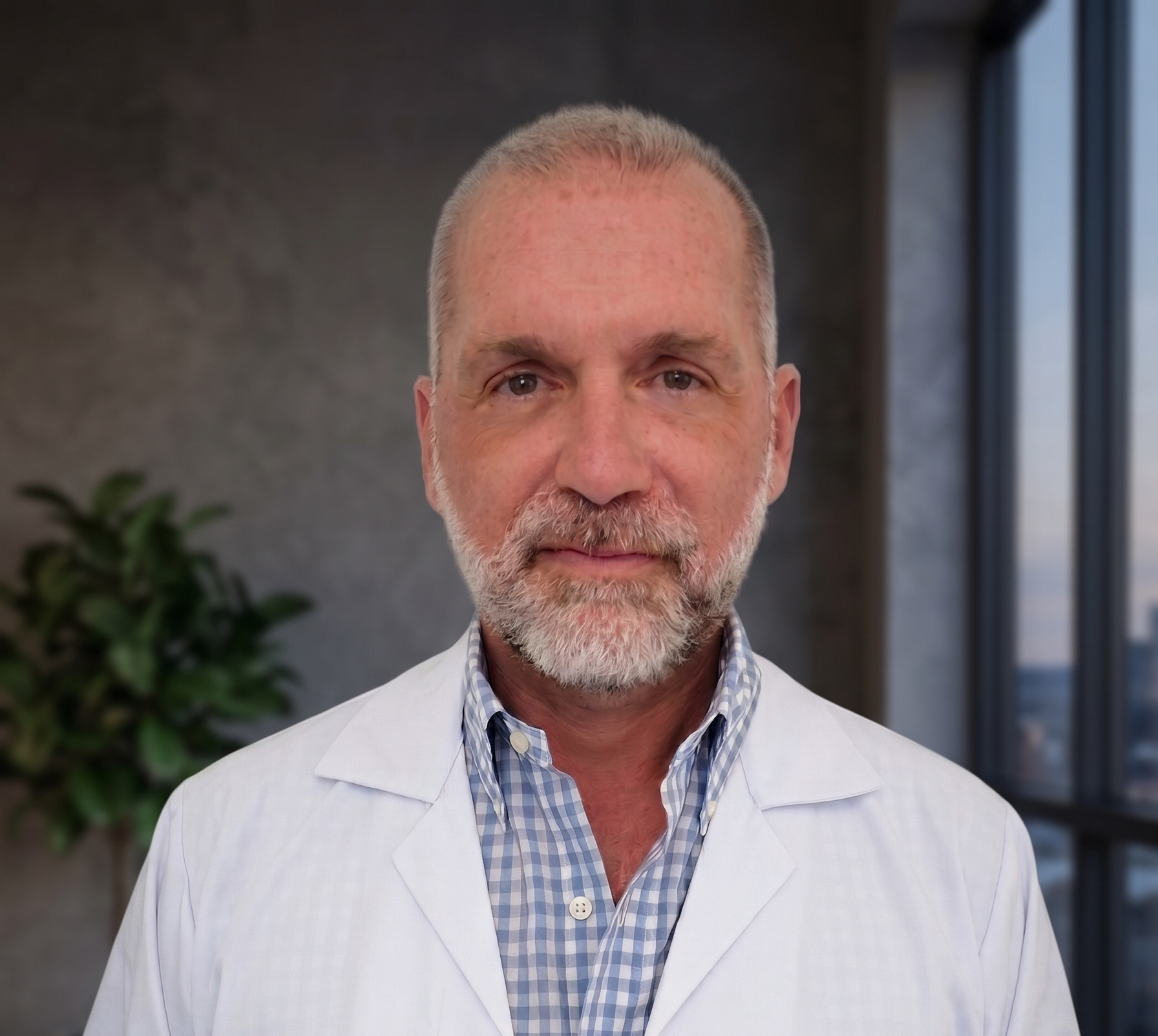
Member of the Board — Clinical
Vasileios Panagiotopoulos
Professor of Neurosurgery — University Hospital Patras
Neurosurgeon, MD, PhD.
Vasileios Panagiotopoulos
Our research committee
  • 01Niki Tripila — Cardiology Resident, MD, MSc, PhD(c).
  • 02Violeta Papalexiou — Neurology Resident, MD, MSc, PhD(c).

Nureon Systems mark Nureon

Medicine deserves the same engineering rigor we apply to bridges, aircraft, and reactors — because every human matters.

We're building the diagnostic infrastructure for the next generation of medicine. Secondary hypertension is where we begin. Not where we end.